
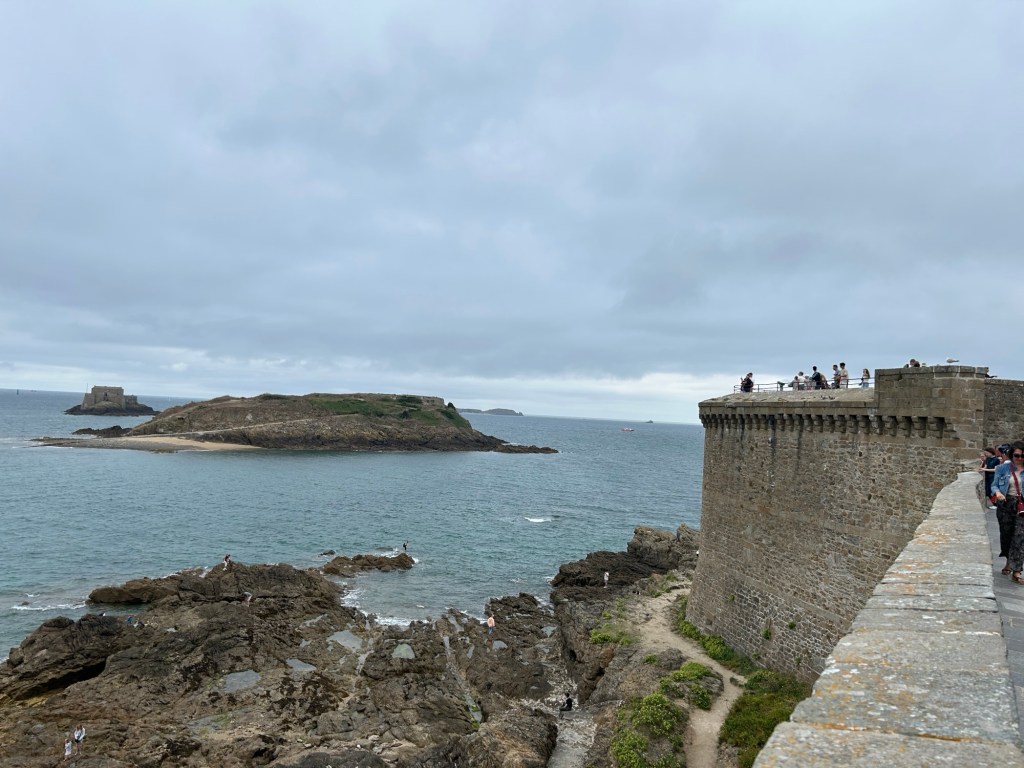
A literary vacation in the summer of 2024 took us to Oxford, the Isle of Guernsey, St. Malo, and Paris.
Among other reasons, St. Malo is famous as the setting for Anthony Doerr’s sumptuous book, All the Light We Cannot See. St. Malo made headlines at the end of World War II when it was bombed by the Allies to roust the resident Germans from their lair. (Sadly, the bombing was supposed to be of Cité d’Aleth, a smaller city that held large German bunkers and anti-aircraft positions, across the mouth of the river from St. Malo. When the French Resistance fighter on the radio said to “bomb la Cité,” the Allies understood they should bomb the city of St. Malo, which is the largest city nearby.) Eighty percent of St. Malo was thus destroyed, buildings blown up, burned, cobblestones sent flying, the choir section of the cathedral destroyed, and many residents killed. Indeed, so many French died in the last months of the war that the French decided not to publicize these deaths, lest the Americans think they were not grateful for their intervention.
The Malois were given a choice after the war–bulldoze and build new, or pick up the bricks and stones to recreate the medieval walled city on the sea. They started picking up bricks and put the jigsaw puzzle back together, taking until 1972 to complete.
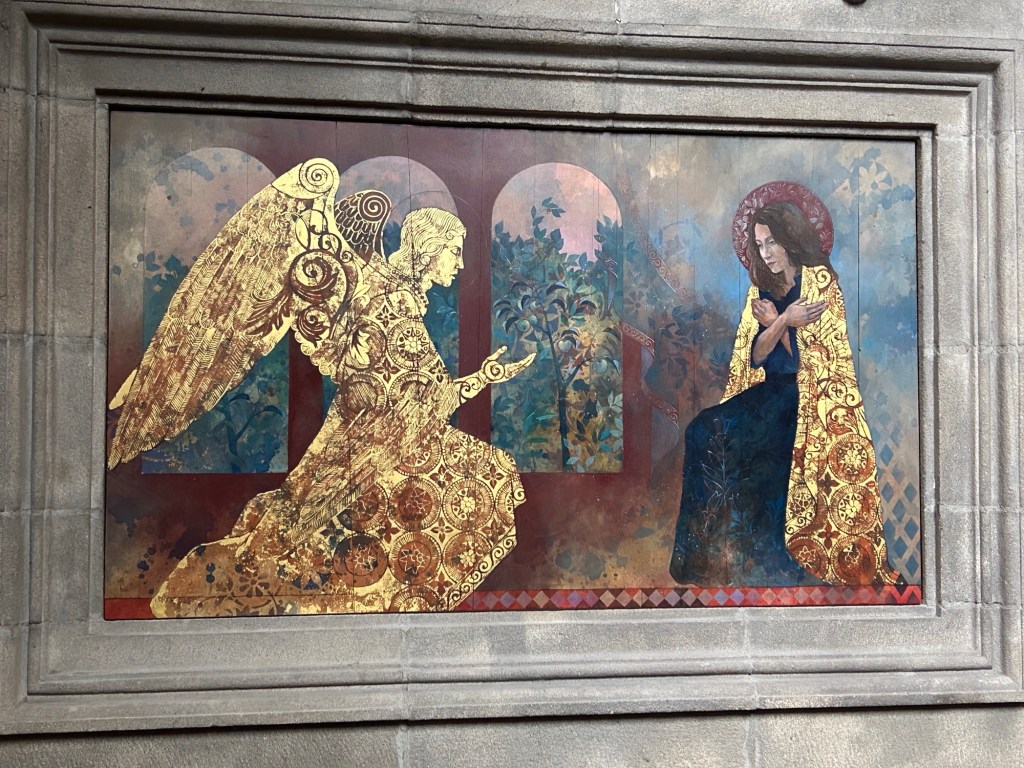
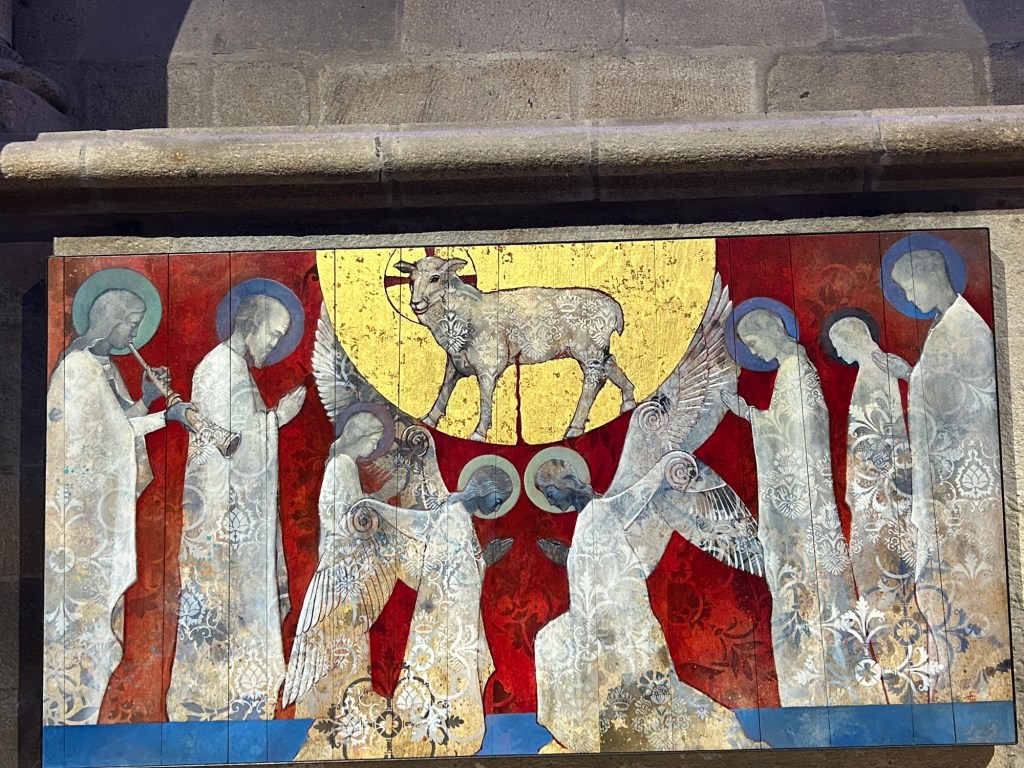
The Cathedral St. Vincent-de-Saragosse-de-Saint-Malo is an astounding place, made more so by the artwork adorning the interior of the reconstructed church. A luminous series of painting on the life of Christ by Augustin Frison Roche surrounds the nave like a jeweled necklace, contrasting the surviving older works. The gold alone mesmerizes from a distance, but a closer look reveals the intricate genius of Roche, adding animals, plants, and small details that bring the glory of God to earth and elevates the earthly to glory–the perfect image of the Incarnation.




 Ernestly Speaking
Leave a reply to sbsherryp3f41fac195 Cancel reply